Moisturizer for Oily Skin: Morning vs Night
Moisturizer for oily skin can feel like a prank, because you are already shiny by lunch and now someone wants you to add lotion on purpose. At Hespere, we keep it simple: clear routines, ingredient reality checks, and choices that match how skin behaves in the real world, not how it behaves in a product ad. This guide breaks down Morning vs Night Moisturizer for Oily Skin in a way that helps you build your first routine without buying a small pharmacy.
If you have oily skin, you probably know the cycle: you skip moisturizer, your face feels tight, your skin overcompensates, and you end up greasier and more annoyed. Then you try a thick cream, it feels like a film, and you swear off moisturizing again. There is a middle lane, and it usually starts with understanding what your skin needs at 8 a.m. versus what it can handle at 10 p.m.
You do not need a 12 step plan to start making smarter picks, you need a few rules you can repeat on autopilot, plus a way to read labels so you are not trapped in the “fragrance vs fear” debate every time you shop.
TL;DR: The no-overwhelm version
- Oily skin still loses water, even when it makes plenty of oil
- Daytime hydration has to play nice with sunscreen and makeup
- Nighttime is when richer textures and repair ingredients tend to fit better
- “Oil-free” does not automatically mean “won’t break you out”
- Look for humectants and barrier helpers, then adjust for fragrance and sensitivity
- Start with one moisturizer, split your application by time of day, and only change one variable at a time
Morning vs Night Moisturizer for Oily Skin: The one decision that fixes a lot
Here is the trick: your morning moisturizer has a job interview every day with sunscreen, makeup, sweat, and whatever your commute throws at you. Your night moisturizer has fewer critics, more time, and usually a better chance to support the barrier while you are not touching your face every seven minutes. One is a lightweight base layer, the other is a support crew.
Think of your routine like stacking paper towels under a leaky sink, not because you love the leak, but because you want control while you figure out the real issue. Morning is the thin layer that keeps water in without turning your T zone into a slip and slide, night is where you can use more cushion if you wake up tight, flaky, or irritated. Keep it boring. That is a compliment.
Your skin type, in 90 seconds (without the quiz spam)
Oily skin means you produce more sebum, but you can still be dehydrated, sensitive, acne-prone, or all three at once, because skin loves combo problems. Wash your face with a gentle cleanser, do nothing for an hour, then check: if you are shiny all over, you are likely oily; if you are shiny in the T zone but feel normal elsewhere, you are combo; if you feel tight and look flaky, you are dry. Simple.
Now add one more layer of truth: if your skin stings with basic products or flushes easily, treat it as sensitive even if it is oily. That is where fragrance and certain actives can throw a wrench into your plan, even if the texture feels “light.” Annoying, but fixable.
How to read an ingredient list without getting a chemistry degree
If you only learn one thing, learn the three bucket idea: humectants pull water in, emollients smooth, occlusives slow water loss. For oily skin, humectants often do a lot of the heavy lifting, things like glycerin and hyaluronic acid, while heavy occlusives can be a sometimes food, not an everyday thing for the whole face.
Also, the first five ingredients usually tell you the vibe, because that is where the bulk of the formula lives. Fragrance is not automatically bad, but if you are dealing with sensitivity or acne inflammation, it is one of the easiest variables to remove so you can tell what is actually helping. Boring wins again.
Moisturizer for oily skin: A simple day vs night framework
Moisturizer for oily skin in the morning should feel like it disappears, because anything that stays tacky can make sunscreen pill or makeup slide. Use less than you think, apply to slightly damp skin, then give it a minute before SPF. One minute. Set a timer if you have to.
At night, moisturizer for oily skin can be slightly richer, especially if you use acne treatments or retinoids that leave you dry around the mouth and nose. You are not trying to look matte in the dark, you are trying to wake up without that tight, papery feeling that makes you over-wash. If you only own one moisturizer, use a thin layer in the morning and a slightly thicker layer at night, same product, different dose.
Shopping without the overwhelm: pick based on your body and your “fragrance tolerance”
A lot of people start skincare with face products, then ignore body skin until it turns itchy in January, and then it is panic mode at the drugstore. North American winters, indoor heat, and long showers can dry you out even if your face is oily, so body care is the low drama place to practice consistency. Two pumps after the shower beats five different products you never use.
As an Amazon Associate I earn from qualifying purchases.
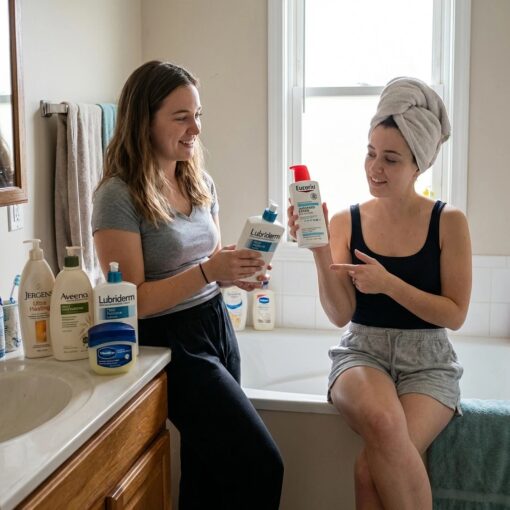
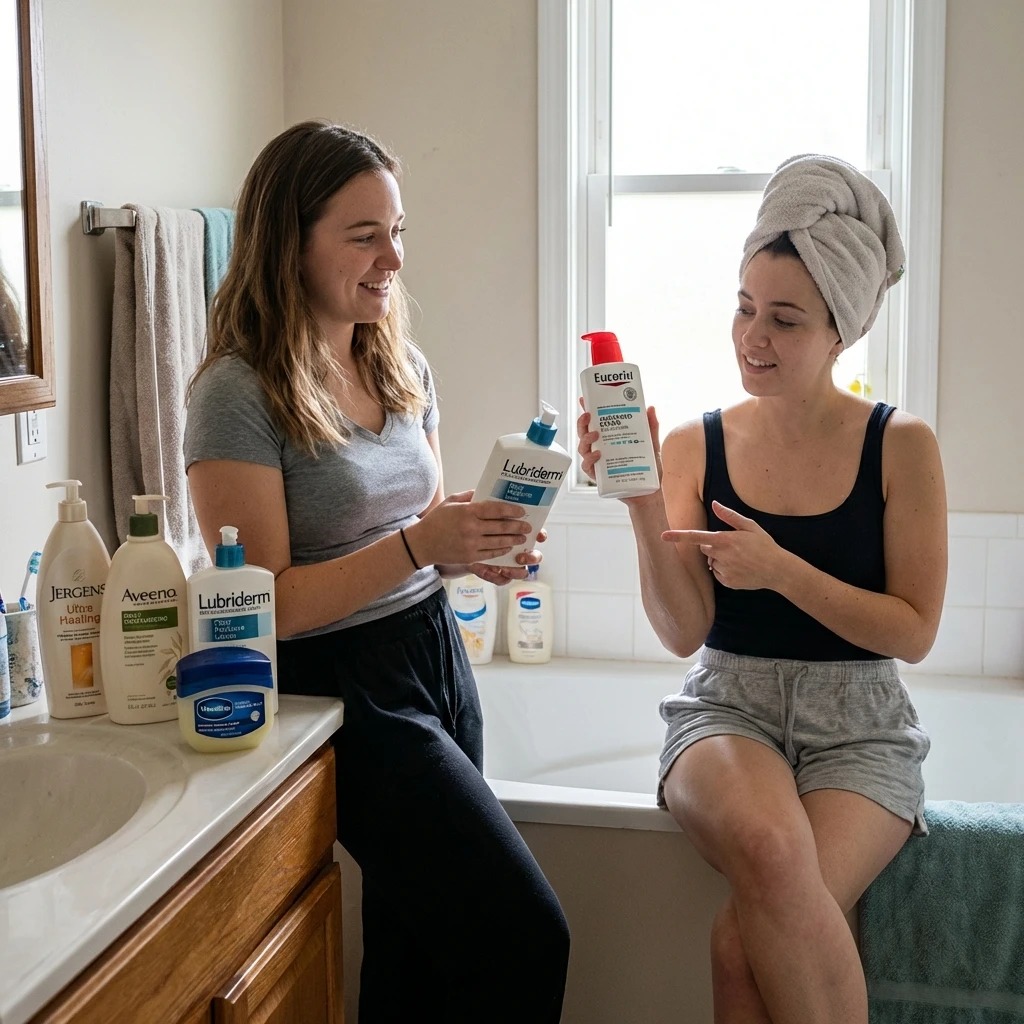
Lubriderm Daily Moisture Lotion, Fragrance Free (paid link)
If you want a straightforward, fragrance-free body lotion for normal to dry skin, this is the kind of option that fits a “just do it daily” routine. Keep it by your towel so you do not forget. That is half the battle.
Aveeno Skin Relief Moisturizing Lotion for Sensitive Skin (paid link)
When your skin is fussy, especially after shaving or during cold snaps, leaning sensitive-skin focused can help you stay consistent. Patch test once. Then commit for two weeks.
Eucerin Advanced Repair Body Lotion (paid link)
If you deal with rough, dry patches, “repair” style body lotions are often built around barrier support and gentle exfoliating helpers. Use it at night if you prefer a less sticky daytime feel.
Jergens Ultra Healing Lotion (paid link)
This is a classic “big bottle, gets used” pick for dry areas like elbows and legs, especially when you want something easy to keep in rotation. Consistency beats perfection.
Keri Original Dry Skin Lotion (paid link)
If your skin tends to feel tight right after a shower, a dry-skin formula can make that post-shower window less miserable. Apply while your skin is still a bit damp.
Cocoa Butter Body Lotion by Nivea (paid link)
Cocoa butter style lotions usually feel richer, which can be useful for legs and arms when the air is dry. If you are scent-sensitive, pay attention here.
Aveeno Daily Moisturizing Lotion Tube, 3 Count (paid link)
Tubes are underrated for gym bags, travel, and keeping one at your desk, because you cannot “forget” a product that is right in front of you. If you wash your hands a lot, this helps.
Vaseline Original Healing Jelly (paid link)
This is not an all-over body lotion replacement, but it is useful as a targeted occlusive for cracked spots, think knuckles, heels, and around nails. Use a tiny amount. Seriously tiny.
Inis the Energy of the Sea Revitalizing Body Lotion (paid link)
If you like body lotion to double as a scent step, this fits that lane, and it can make the routine feel more like a choice than a chore. It is the “I want to smell like I have my life together” option.
Estée Lauder Beautiful Perfumed Body Lotion (paid link)
Another fragrance-forward pick, useful if you prefer layering scent with lotion instead of going heavier on perfume. If you are sensitive, keep it to areas that do not react, like arms.
Key Takeaways (No 12-step chaos)
- Moisturizer for oily skin is about water balance and barrier support, not adding more oil
- Morning products need to sit well under sunscreen; night is where richer application makes sense
- Read ingredient lists by function: humectant, emollient, occlusive
- If you are sensitive or acne-prone, fragrance is an easy variable to control
- Body care is a low-stress place to build the habit that makes your routine work
Morning vs night choices get simpler when you stop treating “oily” as one personality type and start treating it as one data point, because you can be oily and dehydrated, oily and sensitive, oily and on acne treatments, and each one changes what feels good on your skin. Keep your morning layer light, let sunscreen do its job, and do not chase a matte finish so hard that you end up over-washing. At night, adjust your amount, not your entire identity, and give your skin a few weeks before you judge it. If you want one quirky test near the end of the day, press a clean blotting sheet to your forehead, then to your cheek, and notice the difference like you are comparing pizza slices in a Toronto food court. Skin gives clues.
If you want help turning your skin type, goals, and budget into a routine you can repeat, you can always Contact Hespere for guidance.