
Itchy Skin Moisturiser Mistakes Explained
Itchy skin moisturiser problems usually aren’t about finding some rare, magical bottle, they’re about how the product fits your skin barrier and how you’re using it day to day. At Hespere, we keep coming back to the same theme: routines work when they’re simple, repeatable, and built on ingredients that do what you think they do. If your lotion “should” help but you’re still scratching, the gap is often a small mistake in timing, texture, or ingredient match.
Picture the usual scene: you hop out of the shower, slap on lotion, and an hour later your shins feel tight again, your elbows sting a bit, and your hands look like they’ve been through one too many dishwashing shifts. You’re not failing skincare. You’re dealing with a barrier that’s losing water faster than you can replace it, plus a product choice that may not be giving your skin what it needs.
What follows is a practical ingredient-first way to fix the itch cycle, with clear explanations of the skincare “big names” people ask about, plus a grounded list of body moisturizers that fit different situations and budgets.
TL;DR: Stop the Itch Loop Fast
- If you’re still itchy after moisturizing, your barrier is probably leaking water and needs better “water plus seal” support
- Fragrance, hot showers, and applying to fully dry skin often keep dryness coming back
- Hyaluronic acid helps when there’s water to hold, but can feel useless if you don’t seal it in
- Niacinamide can calm and support barrier function, while retinoids can irritate if you’re already itchy
- Pick a lotion based on texture and tolerance, then apply on damp skin and spot-seal the worst areas
- Use a simple two-step: lotion first, then an occlusive on cracks or flaky patches
Why itchy skin moisturiser fails: the barrier math
Here’s the unglamorous truth: itch often comes from dryness plus irritation, and dryness is basically water leaving your skin faster than your routine replaces it. Think of your skin barrier like a screen door on a submarine, it’s still a door, but it’s not doing the one job you need it to do, so everything feels off even if the rest of the setup looks fine.
Start with the basics: lukewarm showers, shorter time under the water, and moisturizing within a few minutes of towel-drying, when skin is still slightly damp. That timing matters because humectants can grab onto water, and occlusives can slow water loss, but neither works well if your skin is already dried out and tight. It’s simple. It’s also the part people skip.
Ingredient cheat sheet for itchy, reactive body skin
Retinol gets the headlines, but itchy body skin usually needs boring ingredients first.
Here’s the plain-English version:
| Ingredient | What it does | How to use it | Who it suits best |
|---|---|---|---|
| Hyaluronic acid | Holds water in the upper layers of skin | Apply on damp skin, then seal with lotion or ointment | Dehydrated skin, most types, can feel “meh” alone |
| Niacinamide | Supports barrier function and can reduce irritation over time | Works in lotions/serums, start a few times a week if sensitive | Dry, sensitive, uneven tone, acne-prone |
| Vitamin C | Antioxidant that helps with dullness and uneven tone | Best in leave-on face products; body use can irritate if strong | Most types, but patch test if reactive |
| Retinoids (retinol) | Increases cell turnover, helps texture and lines | Start low and slow, avoid on already itchy or cracked areas | Not ideal during flare-ups, better once calm |
If you’re in an active itchy phase, retinoids can add friction to an already annoyed barrier, so park them for later. Niacinamide and barrier-friendly moisturizers tend to be easier to live with in the moment, especially if your skin also gets fussy around fragrance or harsh body washes.
The biggest itchy skin moisturiser mistakes (and quick fixes)
Most “I moisturize and I’m still itchy” stories trace back to one of these.
First, you’re applying to fully dry skin, which turns a lot of lotions into a thin film that never really bonds with water. Second, you’re relying on a single layer when you need a combo, lotion for water support, then an occlusive to seal the worst spots. Third, fragrance is sneaking in and acting like a tiny heckler, not everyone reacts, but enough people do that it’s worth noticing if your itch has no other explanation.
In North America, winter heating is a big villain too, forced-air heat in a Toronto condo or a Chicago walk-up can make your skin feel like it’s been left beside a space heater. Add hot showers, and you’ve got a predictable recipe for itch. Annoying, but fixable.
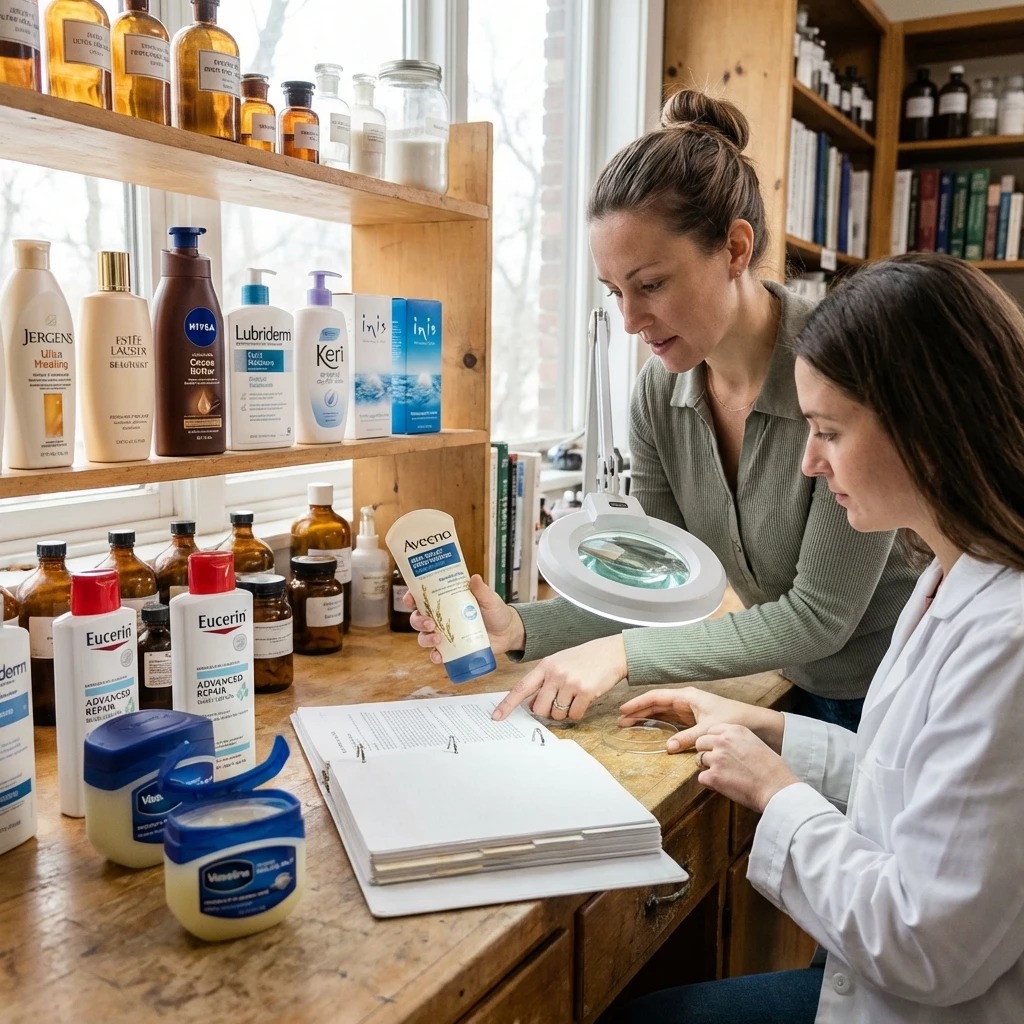
A practical body-lotion lineup for itchy days
As an Amazon Associate I earn from qualifying purchases.
Use this as a decision list, not a “buy everything” list, and keep your routine boring until the itch calms down.
Lubriderm Daily Moisture Lotion – For Normal To Dry Fragrance Free, 16 oz (paid link)
If fragrance tends to set you off, going fragrance-free removes one common variable, and that alone can change the whole week. Use it right after the shower, then spot-seal with an occlusive where you crack.
Aveeno Skin Relief Moisturizing Lotion for Sensitive Skin (paid link)
When your skin feels reactive, a sensitive-skin formula is often the easiest “no drama” option, especially for arms, legs, and areas that sting after shaving. Keep the layer generous, and don’t rub until your skin is angry, press it in.
Eucerin Advanced Repair Body Lotion 16.9 Fluid Ounce (paid link)
For rough, scaly, “why are my shins doing this” texture, repair-style lotions are a common go-to. Put it on damp skin, wait a minute, then get dressed.
Jergens Ultra Healing Lotion, 32 Ounce (paid link)
If you want a big pump bottle that you’ll actually use every day, consistency beats perfection. Keep it by the bathroom sink or next to your bed, wherever you’ll remember.
Keri original dry skin lotion, soothing dry skin formula – 20 Oz (paid link)
Dry skin that’s more “tight and papery” than reactive often does well with a straightforward dry-skin lotion. Use it twice daily for a week and see if the itch backs off.
Cocoa Butter Body Lotion by Nivea for Unisex (paid link)
Cocoa butter textures can feel more sealing, which helps when your skin is losing water fast. If you’re acne-prone on the chest or back, pay attention there and keep application lighter in those zones.
Aveeno Daily Moisturizing Lotion Tube, 3 Count (paid link)
A tube you can toss in a bag solves the “I only moisturize at home” problem. Midday hand and elbow reapplication can stop the itch from ramping up by dinner.
Vaseline Original Healing Jelly – Protects Dry, Cracked Skin (paid link)
This is the sealant step, not the water step, so use it over lotion on cracked knuckles, flaky corners of the nose, or heels. Tiny amount. Big difference.
Inis the Energy of the Sea Revitalizing Body Lotion, 500ml (paid link)
If you like a sensorial routine and your skin tolerates fragrance, this can be your “I will actually apply this” option. Just don’t use fragranced body lotion as your test product during an itch flare-up, keep variables low.
Estée Lauder Beautiful Perfumed Body Lotion, 248 ml (paid link)
This sits in the “treat” category, more about scent and feel than troubleshooting. Save it for stable-skin days, like when you’re going out and your barrier isn’t acting up.
How to combine ingredients without stirring up itch
Once you’re stable, you can add brighter, stronger actives back in, but itchy phases call for restraint. Keep retinol for face routines or for later, and if you’re using vitamin C on the face, avoid dragging leftovers onto irritated body patches where it can sting.
Here’s a simple structure that tends to behave: shower, pat until damp, apply your main lotion, then seal the worst areas with an occlusive. That’s it. And if you need a quirky detail to make it stick, keep a travel-size tube by your couch where the TV remote lives, because if you’re bingeing a show you will remember to moisturize your hands.
Itchy skin moisturiser Key Takeaways (No More Scratchy Finale)
- Apply lotion to slightly damp skin, not fully dry skin
- Use a two-step on problem areas: lotion, then an occlusive seal
- Park retinoids during active itch, bring them back after things calm down
- If you’re sensitive, fragrance-free options reduce guesswork
- Consistency beats switching products every few days
- If itching persists with redness, cracking, or oozing, consider checking in with a clinician
A good routine doesn’t need ten steps, it needs the right steps in the right order, repeated long enough to see the signal through the noise. If you’re stuck, treat itch like a barrier problem first, then layer in “nice-to-have” ingredients like vitamin C or retinoids once your skin stops complaining. And remember, the goal isn’t to own the most products, it’s to get to a week where you don’t think about your legs at all. That’s the win. If you want help sorting your ingredients, building a routine, or figuring out why your skin keeps acting up, you can always Contact Hespere.