
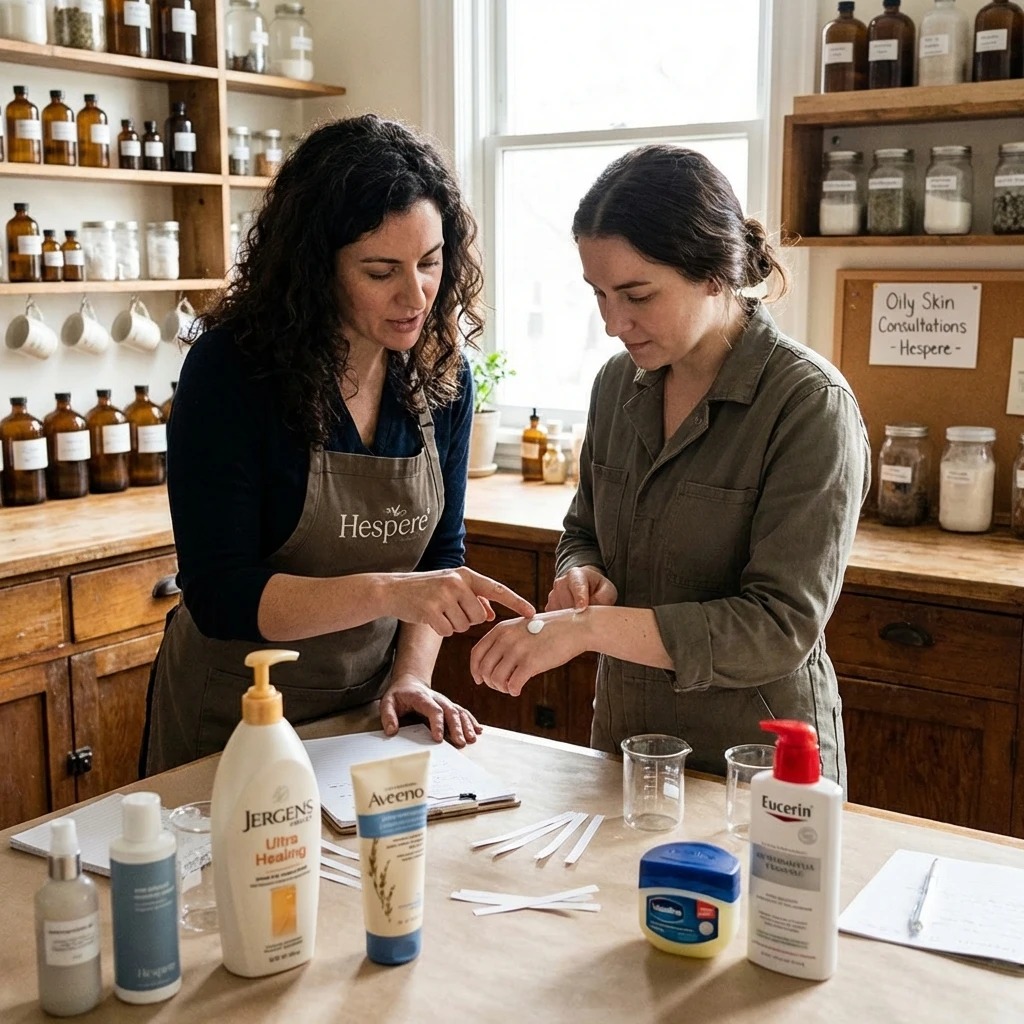
Moisturizer for Oily Skin: Beginner Picks
Finding a moisturizer for oily skin can feel like trying to buy jeans online: everything claims it “fits,” half of it pills, and somehow you still end up annoyed. At Hespere, we keep it plain and testable, with routines that work on real mornings and real budgets, plus ingredient-first thinking that helps you pick products without getting pulled around by hype.
If your forehead turns shiny by lunch, your cheeks still feel tight after cleansing, or you’re juggling breakouts and dry patches at the same time, you’re not doing anything wrong. Skin can be oily and dehydrated, reactive and acne-prone, or fine most days and then randomly furious the week before your period, and the internet doesn’t always explain that part.
So here’s the plan: figure out what your skin is actually doing, learn how to read a label like a normal person, then choose a moisturizer based on texture and ingredients, not vibes, with a few no-drama body options that make routine-building easier.
TL;DR: The No-Overwhelm Version
- Oily skin still needs water and barrier support, not just “oil control”
- Skipping moisturizer can backfire by increasing tightness, flaking, and irritation
- Ingredient lists look like chemistry homework, but you only need to spot a few patterns
- Think in layers: cleanse, moisturize, sunscreen, then add one treatment if needed
- Start with one product you’ll use daily, patch test, and change one thing at a time
Step 1: Confirm What “Oily” Means for You
Oiliness isn’t a personality trait, it’s a clue. Some people produce more sebum all over, some get an oily T-zone with normal cheeks, and some look oily because their skin is dehydrated and overcompensating, like a fryer pan that keeps getting wiped dry then re-greased.
Do a simple check: cleanse with a gentle cleanser, apply nothing, wait an hour. If you’re shiny everywhere, you’re likely oily; shiny only in the T-zone points to combination; tightness plus shine often signals dehydration. One more thing. If you’re flaking but also breaking out, you can still use moisturizer, you just need the right kind.
Step 2: Build Your First Routine in Four Moves
You don’t need a 10-step setup to get results. You need a routine you’ll actually repeat on a Tuesday when you’re running late and your coffee tastes like regret.
Here’s the starter structure:
- Cleanser (PM, and AM if you wake up oily)
- Moisturizer (AM and PM)
- Sunscreen (AM, every day)
- Optional treatment (one at a time, like salicylic acid or retinoid)
Keep your moisturizer consistent for two weeks before swapping things around. That time window matters because irritation and breakouts often show up after a few uses, not the first night.
Step 3: Read an Ingredient List Without Losing It
Labels can be long, but you’re hunting for signals, not memorizing the periodic table. Start with the first 5 to 10 ingredients, since those make up most of the formula.
A quick cheat sheet:
- Humectants (glycerin, hyaluronic acid) pull water into the skin
- Emollients (fatty alcohols, plant oils, esters) smooth and soften
- Occlusives (petrolatum, dimethicone) reduce water loss
For oily or acne-prone skin, a moisturizer often works best when it’s humectant-heavy with a lighter occlusive, because you want hydration without a greasy feel. Fragrance can be fine for some people and a problem for others, especially if you’re also using acne actives. Pay attention to your own pattern.
Step 4: How to Choose a Moisturizer for Oily Skin
The best moisturizer for oily skin is usually one you’ll apply twice a day without feeling like you’re wearing a film. Texture is part of it, but so is how it behaves under sunscreen and makeup, since pilling can turn your morning into a weird little snow globe.
Use this decision table to narrow it down:
| Your main issue | What to prioritize | What to be cautious with |
|---|---|---|
| Shiny by noon | lighter textures, humectants, non-greasy finish | heavy occlusives all over the face |
| Breakouts + dryness | barrier support, fragrance-free, simple formulas | adding multiple new actives at once |
| Sensitive and reactive | fragrance-free, minimal ingredient list | strongly scented body products near face/neck |
| Dehydrated but oily | glycerin, gentle occlusives at night | over-cleansing, skipping moisturizer |
This is also where body care helps more than people admit. If your body skin is dry, itchy, or tight, getting that under control makes your whole routine feel easier, because you’re not fighting irritation everywhere at once.
Step 5: Product Shortlist (Body Moisturizers That Keep Routine Simple)
These aren’t face moisturizers, but they’re useful if you’re building consistency, managing dryness from shaving or winter air, or trying to keep fragrance and irritation from creeping into your routine. As an Amazon Associate I earn from qualifying purchases.
Lubriderm Daily Moisture Lotion, Fragrance Free (paid link)
A fragrance-free body option makes sense if you’re sensitive or using acne treatments and want fewer variables, especially around the neck and chest. Use it after showering while skin is still a bit damp.
Eucerin Advanced Repair Body Lotion 16.9 Fluid Ounce (paid link)
If you deal with rough, dry patches, this type of formula is often chosen for barrier support. Keep it for elbows, legs, and areas that get scaly in winter.
Aveeno Skin Relief Moisturizing Lotion for Sensitive Skin (paid link)
When your skin feels reactive, going with a sensitive-skin focused lotion can help you stay consistent without the sting factor.
Jergens Ultra Healing Lotion, 32 Ounce (paid link)
A big pump bottle is the kind of practical move that makes routines stick, since you’re more likely to use it when it’s right there by the sink.
Keri Original Dry Skin Lotion, 20 Oz (paid link)
If your skin gets dry fast after washing hands or showering, a straightforward daily lotion can cover the basics without overthinking it.
Aveeno Daily Moisturizing Lotion Tube, 3 Count (paid link)
Toss one in a bag, one at your desk, one by your bed. Routine logistics count, and this is the skincare version of keeping an extra phone charger in your car.
Vaseline Original Healing Jelly (paid link)
Petrolatum is an occlusive, so it’s useful as a spot-step for cracked areas like knuckles, heels, or a flaky patch, not necessarily something you smear everywhere when you’re oily.
Cocoa Butter Body Lotion by Nivea for Unisex (paid link)
If you like richer body textures, cocoa butter style lotions can feel good on legs and arms, especially when the heat kicks on and your skin starts acting like it lives in the Mojave.
Inis the Energy of the Sea Revitalizing Body Lotion, 500ml (paid link)
Some people want their body lotion to feel like part of getting ready, not a chore. If you’re into that, keep scented products on the body and away from acne-prone face areas.
Estée Lauder Beautiful Perfumed Body Lotion, 248 ml (paid link)
This fits the “body lotion as fragrance layer” category, which can be fun for nights out, but it’s smarter to avoid using it where you break out.
Step 6: Shopping Rules That Prevent Regret
Here’s the boring truth that saves money: change one thing at a time. If you add a new cleanser, a new treatment, and a new moisturizer for oily skin in the same week, you’ll have no clue what caused the breakout, the sting, or the random peeling.
North American weather swings can also mess with you. A Toronto winter or a Colorado dry spell might push you toward more barrier support at night, while a humid July in New York can make you prefer lighter layers in the morning. Keep two lanes: “normal days” and “my skin is being weird” days. If you want a quirky tip, keep a tiny dab of petrolatum for cuticles, it’s a solid move while you’re watching a hockey game and absentmindedly picking at your hands.
Moisturizer for Oily Skin Key Takeaways, No Fuss Edition
- A moisturizer for oily skin should hydrate without feeling like a coating
- Oily and dehydrated can happen together, and it changes what you buy
- Read the first 5 to 10 ingredients and look for humectants, emollients, and occlusives
- Build a routine you’ll repeat: cleanse, moisturize, sunscreen, then one treatment
- Body products can support consistency, especially when you’re simplifying
Good skincare is mostly pattern recognition. When you know how your skin behaves after cleansing, how it reacts to fragrance, and whether you’re oily, dehydrated, or both, shopping stops feeling like a gamble and starts feeling like choosing the right tool. Keep your routine boring for a bit, take notes in your phone if you need to, and resist the urge to fix everything in one cart. If you’re using acne actives, you’ll often do better with fewer moving parts, plus one moisturizer you don’t dread applying. That’s the baseline. Once that’s stable, upgrades make sense. If you want help sorting your routine without the noise, you can Contact Hespere for guidance that stays clear and human.