
Itchy Skin Moisturiser Picks That Work
An itchy skin moisturiser can feel like a small decision until you are standing in your bathroom, scratching your shins, wondering why the lotion that worked last month suddenly stings. At Hespere, we keep this simple on purpose: look at what your skin is doing, match it to ingredients that actually help, and choose a product that fits your budget and tolerance for fragrance, texture, and fuss.
If your skin gets itchy after showers, during winter heating season, or whenever you shave, you are not imagining it. Dryness, barrier damage, and irritation stack up fast, and a lot of body lotions are built more for scent and slip than for the kind of repair that calms that crawl-on-your-skin feeling.
Below, you will find a clear, no-hype set of picks from drugstore to premium, plus how to choose based on your skin type and what tends to trigger the itch in the first place.
TL;DR: Itchy Skin Moisturiser, Simplified
- Itch often shows up when the skin barrier is short on water, oils, or both, especially after hot showers and in dry indoor air
- The right formula can cut down the urge to scratch and help skin feel steady again
- “More fragrance” and “more slip” are not the same thing as “more hydration”
- Think in layers: humectants for water, emollients for softness, occlusives to lock it in
- Start with a fragrance-free daily lotion, then add a sealing step on the worst spots if needed
Why your skin itches: the quick, useful science
The itch you feel on arms, legs, and hands is often about barrier function, not just “dry skin” in the vague way people say it. When the outer layer of skin loses water, tiny cracks and inflammation can follow, and nerve endings get easier to annoy, kind of like a screen door full of holes that lets every mosquito in at once.
One detail matters more than most labels: ingredients. A solid routine usually mixes three categories, humectants (like glycerin) that pull water into the skin, emollients (fatty alcohols, oils) that smooth rough patches, and occlusives (petrolatum) that slow water loss. Keep it basic. It works.
How to pick an itchy skin moisturiser by skin type
Start with your trigger profile, because that decides the texture you can live with and the ingredients you should avoid.
If you are sensitive or eczema-prone, fragrance-free is usually the safer call, and formulas with colloidal oatmeal can feel more comfortable for reactive skin. If you are just dry, you can often tolerate richer creams, urea, or heavier occlusives on rough areas. If you are acne-prone on the body, you may still need barrier support, but you might prefer lighter layers and careful application on breakout zones.
In North America, weather swings do half the damage for you. Think Canadian winter heating or a Midwest cold snap, then a hot shower, then leggings, and now your legs are mad. That pattern is common. Very common.
A quick comparison table (so you can choose fast)
| What you need | Look for | Who it fits | Typical feel |
|---|---|---|---|
| Daily, no-drama hydration | glycerin, fragrance-free options | normal to dry, sensitive | light to medium |
| Relief for sensitive itch | colloidal oatmeal, barrier support | sensitive, reactive | medium |
| Rough, scaly patches | urea, richer repair formulas | very dry, textured | medium to rich |
| “Seal it in” protection | petrolatum | cracked spots, hands, heels | heavy, glossy |
| Scent as part of the vibe | fragrance, lotion-as-perfume | fragrance-tolerant | varies |
Best Itchy Skin Moisturiser Picks (drugstore to premium)
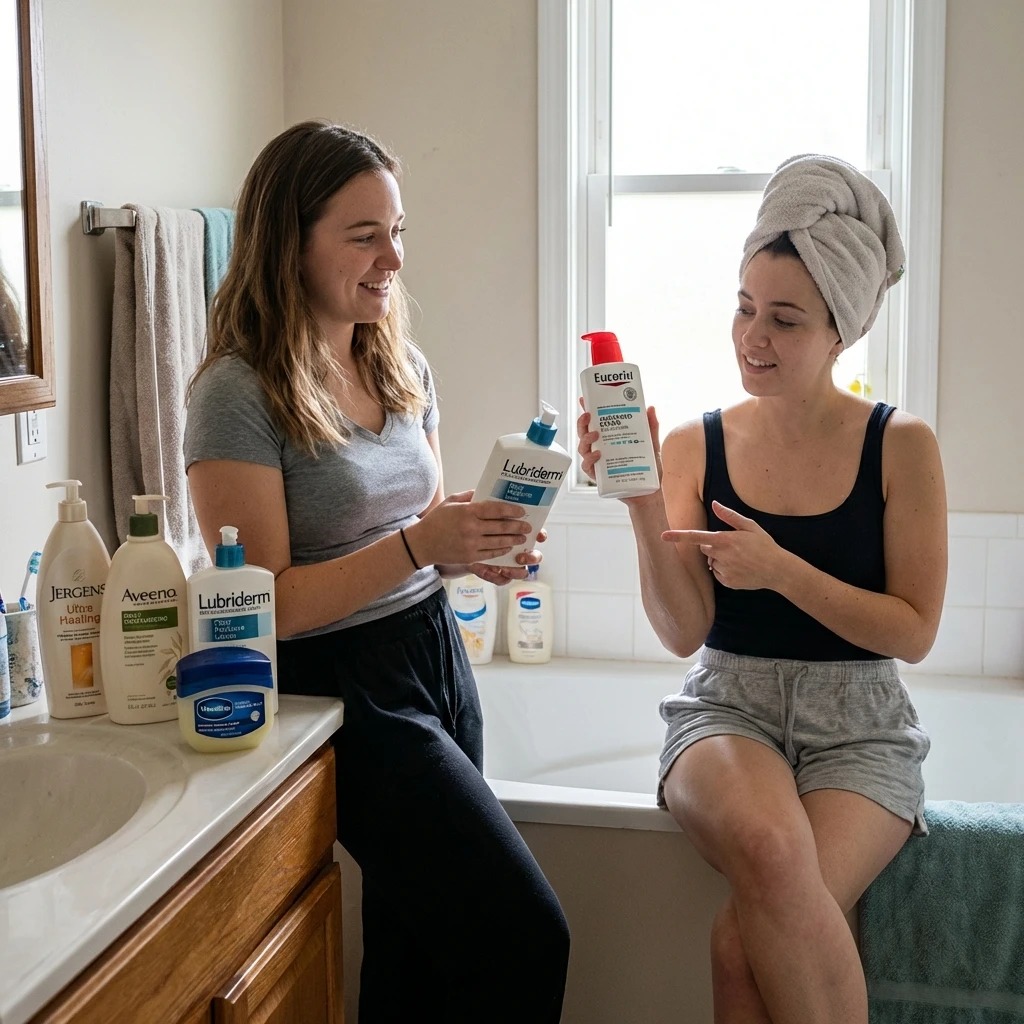
Lubriderm Daily Moisture Lotion (paid link)
If you want a simple, fragrance-free daily lotion for normal to dry skin, this is the type of formula that makes routines stick, because it does not ask you to “get into” it. Use it right after showering while your skin is still a bit damp, and you will usually need less product than you think. It is a steady pick when you want hydration without adding scent to the mix. Boring can be good. Very good.
Aveeno Skin Relief Moisturizing Lotion for Sensitive Skin (paid link)
When itch and sensitivity go together, colloidal oatmeal is a common go-to ingredient in dermatology because it can help support the skin barrier and soothe irritation. This one fits days when your skin feels reactive, like after shaving or when you overdid it with hot water. If fragrance tends to bug you, this category is often a safer lane. Your skin gets a break.
Eucerin Advanced Repair Body Lotion (paid link)
For rough, persistently dry skin, urea is one of the better studied ingredients for softening and improving hydration, because it helps bind water and can smooth texture over time. This is the sort of product you reach for when your legs look ashy or feel tight even after you moisturize, and you want more than a basic lotion. Go slow if your skin is irritated, since stronger repair formulas can feel tingly on compromised areas. It happens.
Jergens Ultra Healing Lotion (paid link)
If you are budget-conscious and want a large bottle you will actually use daily, this is a practical option for dry body skin. It sits in that “daily driver” zone, especially for arms and legs, and it is easy to reapply without feeling like you dipped yourself in cooking oil. Keep it by the sink for hand reapplications. That little habit changes things.
Keri original dry skin lotion (paid link)
Some lotions are built for that classic “my skin just feels dry all the time” problem, not for trend ingredients. This is a straightforward dry-skin formula that can work well for everyday use when you want hydration and comfort without overthinking it. If you are pairing with an exfoliating body wash or you shave often, a consistent lotion like this can help keep the baseline calmer. Consistency wins.
Aveeno Daily Moisturizing Lotion Tube, 3 Count (paid link)
If you travel, throw a tube in your gym bag, or just hate pumping a bottle with slippery hands, tubes make it easier to keep up the routine. This is a good option for “I need lotion in multiple places” life, desk, car, carry-on, and that one bag you always forget to clean out. Convenience is skincare, too.
Vaseline Original Healing Jelly (paid link)
When itch is coming from cracked, exposed patches, petrolatum is one of the most effective occlusives we have for reducing water loss. Use this as a sealing step on top of lotion, mainly on hands, cuticles, elbows, heels, or any spot that keeps flaring up. A thin layer is enough. This is not a full-body, get-dressed-immediately product.
Cocoa Butter Body Lotion by Nivea (paid link)
If you like a richer feel and you tolerate fragrance, cocoa butter-style body lotions can feel comforting on dry skin, especially in colder months. This one fits the “I want moisture and I also want it to feel like body care” camp. If you are sensitive, patch test first, since fragrance is a common irritant trigger for itchy skin. Your nose may love it while your skin disagrees.
Inis the Energy of the Sea Revitalizing Body Lotion (paid link)
Premium body lotions often lean into scent and the experience of applying them. If you want your body lotion to feel like a treat and you do not react to fragrance, this can be a fun upgrade that still counts as moisturizing. Think of it as the product you use when you want your skin to feel cared for after a long day, not when you are troubleshooting a flare. Mood matters sometimes.
Estée Lauder Beautiful Perfumed Body Lotion (paid link)
This is firmly in the “fragrance is the point” category, which can be perfect if your skin tolerates it and you like matching your body care to your perfume. If you are actively dealing with itch, consider using this more selectively, like on areas that are not flaring, and keep a fragrance-free lotion for your problem zones. Two-lotion life is normal. Also, real talk, if you apply this then put on a hoodie, that hoodie will smell like it for days.
As an Amazon Associate I earn from qualifying purchases.
How to use an itchy skin moisturiser so it actually helps
Timing beats technique, but a little technique helps. Apply lotion within a few minutes of showering, keep water warm not hot, and use more product on your lower legs, because they tend to lose moisture faster. If itch is stubborn, layer lotion first, then add a thin sealing layer of petrolatum on the worst spots.
One warning sign: if you have widespread itch with a rash, broken skin, signs of infection, or itch that will not settle after consistent moisturizing, it is worth checking in with a clinician. Skin is honest, but it is not always simple.
Key Takeaways (No-Scratch Edition)
- An itchy skin moisturiser works best when it supports the skin barrier, not when it just feels slippery
- Fragrance-free is often the safer move for reactive skin, especially during flares
- Urea-based body lotions can help with rough, persistent dryness, but go slow on irritated areas
- Petrolatum is a strong sealing step for cracked patches and repeat-problem spots
- Keeping lotion in your bag or by the sink makes daily use more realistic
If you want fewer itchy days, build a small routine you can repeat, pick one daily lotion you like using, then add a heavier “spot strategy” for heels, hands, and elbows that keep acting up. Pay attention to patterns, hot showers, new fragrances, winter heating, and scratchy fabrics all add up, and your skin usually tells you which one is the culprit. The goal is not perfection. It is fewer flare moments and less mental bandwidth spent thinking about your legs. If you need help sorting your skin type, ingredient tolerance, and a routine that fits your budget, that is the kind of clarity Hespere is built for. Reach out when you are ready to get practical.
Contact Hespere here: Contact Hespere