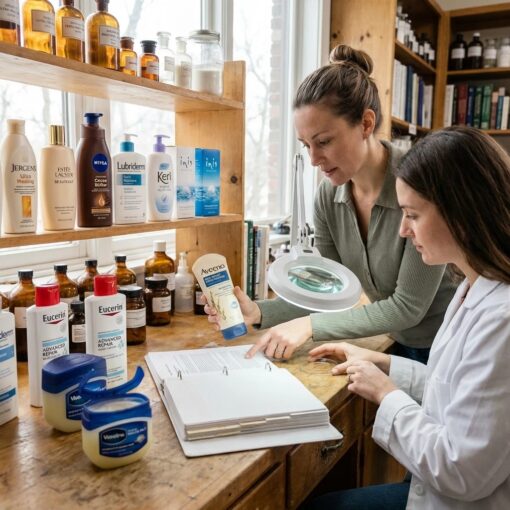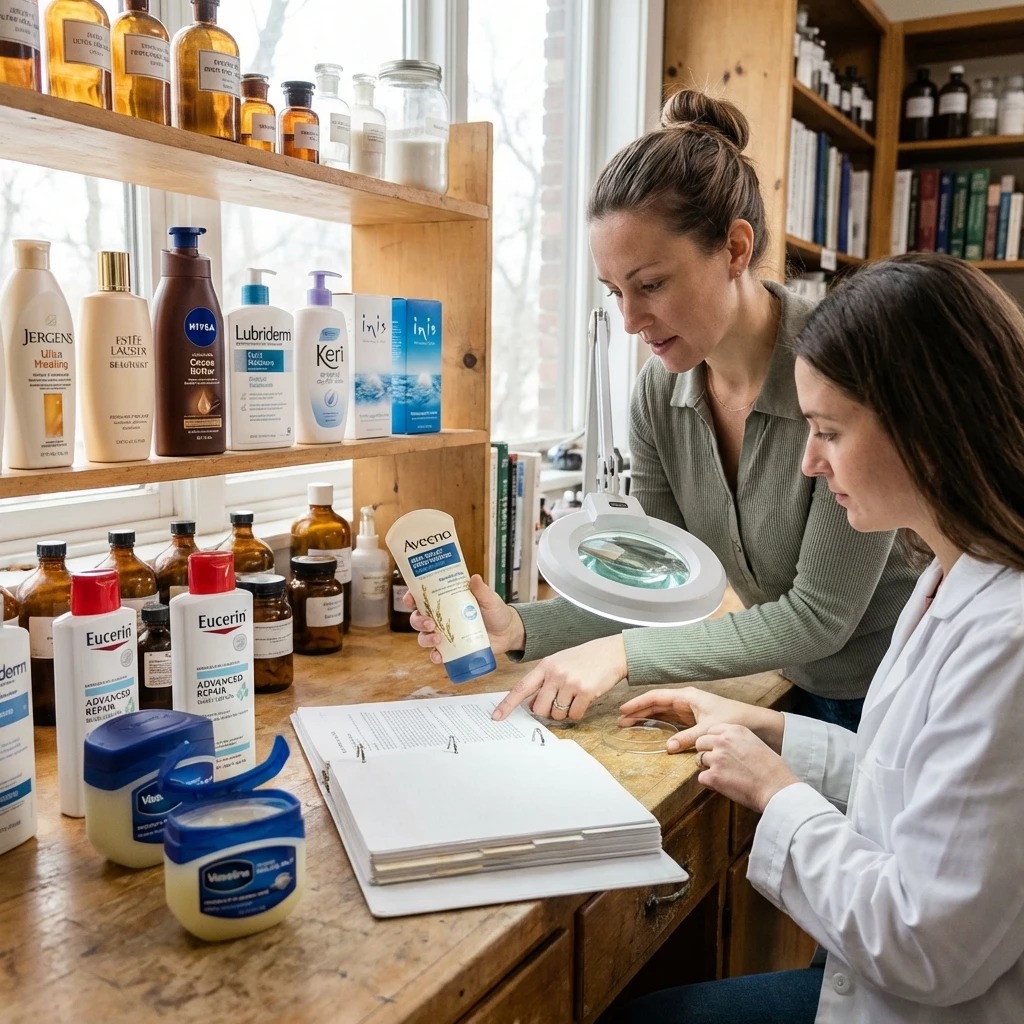

Itchy Skin Moisturiser vs Lotion
Itchy skin moisturiser questions usually start the same way: your skin feels fine, then suddenly it’s itchy, tight, or flaky, and you’re standing in the aisle wondering if a “moisturiser” is different from a lotion in any way that actually matters. At Hespere, we care about the unglamorous stuff that changes your day to day skin comfort, and we like answers that don’t require a chemistry degree or a 12 step routine.
If you’re juggling breakouts on your face but dryness on your legs, or your hands sting after dish duty, you’re not being “high maintenance.” You’re dealing with a skin barrier that’s asking for a better plan, plus ingredient labels that often read like a foreign language. There’s a real difference between “my skin is dry” and “my skin is irritated,” and the product that fixes one can annoy the other.
So this is a practical guide to deciding what to use when itch shows up, how lotion and moisturiser language gets confusing, and what common ingredients (including retinol, niacinamide, vitamin C, and hyaluronic acid) actually do, especially when your skin is reactive.
TL;DR (Read This First)
- Itch often points to a stressed skin barrier, not just “needing more hydration.”
- “Lotion” vs “moisturiser” is mostly marketing language, texture and ingredients matter more than the word on the bottle.
- Humectants add water, occlusives seal it in, and emollients smooth rough edges, most good body products mix all three.
- Strong face ingredients can help long term concerns, but they can also trigger itch if your barrier is already cranky.
- Start by calming and sealing, then add actives slowly, one at a time, with a simple schedule you can stick to.
Itchy skin moisturiser vs lotion: what are you really choosing?
Here’s the first plot twist: “moisturiser” is a category, and lotion is a format. In North America, brands use “moisturiser” for face and body, while “lotion” usually signals a lighter texture, more water, and easier spread, but none of that is enforced by rules, so you still have to read the ingredient list and pay attention to how your skin behaves.
Think of your skin barrier like a screen door made of toast: when it’s intact, it keeps things where they belong, but when it’s full of holes, water escapes and irritants get in, and the itch shows up right on schedule. Annoyingly, this can happen even if your skin looks “fine.” Itch is often the first clue.
For body itch, what usually helps fastest is a product that both adds water and slows water loss, applied right after bathing while your skin is still a bit damp. That’s not fancy. It works.
The ingredient map: humectants, occlusives, emollients
Before you pick anything, it helps to sort ingredients into three jobs. Humectants (like glycerin and hyaluronic acid) pull water into the top layer of skin. Occlusives (like petrolatum) form a barrier to slow evaporation. Emollients (like fatty alcohols and plant oils) fill in rough spots so skin feels smoother and less “crispy.”
Itch tends to calm down when you get the occlusive part right, especially in winter heating season or after long showers. One simple move is sealing targeted areas (hands, elbows, heels) with Vaseline Original Healing Jelly (paid link) after your regular body lotion, since petrolatum is one of the best studied occlusives for reducing water loss.
If you want a single bottle approach for rough, dry body skin, look for formulas built around humectants plus barrier support, like Eucerin Advanced Repair Body Lotion (paid link), which is commonly chosen for very dry, itchy-feeling skin because it’s designed for repair-focused daily use.
Where retinol, niacinamide, vitamin C, and hyaluronic acid fit (and where they don’t)
Actives can be useful, but itchy body skin usually isn’t an “active ingredient problem.” It’s a comfort and barrier problem first. Still, you probably use (or want to use) actives on your face for acne, dark spots, or fine lines, and the face can get itchy too when you push too hard.
Here’s the plain-English breakdown:
| Ingredient | What it does | How to use when itch is a factor | Skin types that tend to do well |
|---|---|---|---|
| Retinol | Speeds up cell turnover, can improve acne and lines over time | Start 1 to 2 nights a week, moisturize first if you’re sensitive, pause if stinging/peeling ramps up | Often better for oily, acne-prone, combo skin, sensitive types need a slower ramp |
| Niacinamide | Supports barrier function, helps with redness and oil control | Good “bridge” active while repairing barrier, usually plays well with other products | Many skin types, including sensitive and acne-prone |
| Vitamin C | Antioxidant, supports tone and dark spot fading | Use in the morning, avoid layering with lots of irritating steps when barrier is stressed | Normal, combo, oily often tolerate it, sensitive skin may need gentler forms |
| Hyaluronic acid | Humectant that helps skin hold water | Apply on damp skin, always top with moisturizer to prevent that tight feeling | Most skin types, but needs a seal on top in dry climates |
If your face is itchy while you’re using actives, don’t take it personally. It often means you need fewer active nights and more boring hydration nights, the skincare equivalent of choosing socks over stilettos when you’re walking to a Blue Jays game in April.
Build a body routine that stops itch, then keep it simple
Body itch responds well to consistency and timing. Shower, pat dry, apply a lotion within a few minutes. That’s the core. From there, pick based on what your skin complains about.
If you want fragrance-free and straightforward for daily use, Lubriderm Daily Moisture Lotion (paid link) fits the “no drama” slot for normal to dry skin. For sensitive or easily reactive skin days, Aveeno Skin Relief Moisturizing Lotion for Sensitive Skin (paid link) is often picked because it’s built for itch-prone comfort rather than glow chasing.
When dryness is the bigger issue, heavier body lotions can feel better and reduce that constant scratchy sensation, and options like Jergens Ultra Healing Lotion (paid link), Keri original dry skin lotion (paid link), or Cocoa Butter Body Lotion by Nivea for Unisex (paid link) can make sense depending on what texture you’ll actually use every day.
Itchy skin moisturiser picks (the ones to keep on your radar)
As an Amazon Associate I earn from qualifying purchases.
Jergens Ultra Healing Lotion, 32 Ounce (paid link)
A common pick for everyday dry body skin when you want one bottle that’s easy to use consistently.
Estée Lauder Beautiful Perfumed Body Lotion, 248 ml (paid link)
If you like your body care to double as scent, this is a “treat” lane option for non-sensitive days.
Aveeno Daily Moisturizing Lotion Tube, 3 Count (paid link)
Handbag, desk, gym bag friendly, useful when frequent washing makes hands and arms feel tight.
Cocoa Butter Body Lotion by Nivea for Unisex (paid link)
A thicker-feeling option for dry areas that need more cushion, especially in colder months.
Lubriderm Daily Moisture Lotion, Fragrance Free, 16 oz (paid link)
A simple fragrance-free daily lotion for normal to dry skin, good when you don’t want extra variables.
Keri original dry skin lotion, 20 Oz (paid link)
A budget-friendly lane for dry skin maintenance when you need a bigger bottle to actually keep up.
Aveeno Skin Relief Moisturizing Lotion for Sensitive Skin (paid link)
A sensible choice when you’re itch-prone and want a lotion designed around comfort.
Inis the Energy of the Sea Revitalizing Body Lotion, 500ml (paid link)
A body lotion option for people who care about the “use experience” and want something that feels like self-care.
Vaseline Original Healing Jelly (paid link)
Best used as a seal on top of lotion for hands, feet, and any spot that keeps flaring up.
Eucerin Advanced Repair Body Lotion 16.9 Fluid Ounce (paid link)
A strong everyday option when your skin feels rough and itch keeps returning, especially in dry indoor air.
When itch needs more than skincare
Sometimes itch isn’t just dryness. If you’ve got a sudden rash, swelling, blisters, oozing, signs of infection, or itch that keeps you up at night for days, it’s worth checking in with a clinician, because eczema, contact dermatitis, and other conditions can look like “dry skin” until they don’t.
Also, if you keep changing products and nothing settles, zoom out. Laundry detergent, fragrance, long hot showers, and scratchy fabrics can keep the cycle going, kind of like wearing a wool sweater and blaming your necklace for the itch. One quirky tip that’s more helpful than it should be: keep a tiny jar of petrolatum by your kitchen sink and use it after dishwashing, because that’s where a lot of hand barrier damage starts.
Itchy skin moisturiser Key Takeaways (No More Guessing)
- Itchy skin moisturiser decisions come down to ingredients and texture, not the label.
- Occlusives help itch fast by sealing water in, especially on hands, feet, and rough patches.
- Hyaluronic acid helps only if you top it with a moisturizer, otherwise skin can feel tight in dry air.
- Retinol and vitamin C can be useful, but barrier comfort should come first when itch is active.
- Pick a body lotion you’ll use daily, then add a “seal” step only where you need it.
Finding the right rhythm matters more than finding a perfect product, because itch tends to improve when your skin gets the same supportive steps every day, not when you rotate through five bottles and hope one clicks. If you’re using actives on your face, treat body care like the stable baseline that keeps everything else easier to manage. If you’re stuck between a lotion and a thicker cream, choose the one you’ll apply after your shower without negotiating with yourself. That’s the real win. Most routines fall apart because they’re annoying, not because they’re “wrong.” When in doubt, calm first, then build.
If you want help turning your products into a routine that fits your skin and your budget, you can always Contact Hespere for guidance.