
Moisturizer for Oily Skin That Works
Moisturizer for oily skin can feel like a prank when you’re already dealing with shine, clogged pores, or breakouts. But the goal isn’t to make your skin “more oily” or to pile on product for the sake of it. It’s to support your skin barrier with the right texture and ingredients, so your face and body stop swinging between greasy and dry, irritated and broken out.
If you’ve ever stood in a drugstore aisle in North America, staring at 200 bottles while a playlist remixes the same chorus you’ve heard since high school, you already know the overwhelm is real. Add in words like “non-comedogenic,” “repair,” “sensitive,” and “fragrance-free,” and it’s easy to buy something random and hope for the best.
At Hespere, we’re into routines that make sense on real mornings, with real budgets, and real skin that has opinions. So this guide starts at the beginning: how to spot your skin type, read an ingredient list without a chemistry degree, and pick moisturizers that fit your life.
TL;DR (TL;DR)
- You want hydration without that coated, greasy feeling or extra congestion
- Skipping moisturizer can backfire, especially if you’re using acne actives or cleansing a lot
- “Oil-free” and “non-comedogenic” don’t automatically mean “great for you”
- Ingredients matter more than vibes: humectants pull in water, occlusives seal it, emollients smooth it out
- Start with a simple routine, patch test, then adjust based on what your skin does over 2 to 4 weeks
Step 1: Figure out what “oily” really means
Here’s the trick: oily skin and dehydrated skin can show up at the same time. You can have oil on the surface, but still feel tight after cleansing, and that combo can push you toward harsh products that make everything weirder.
Try this basic check tonight. Wash your face with a gentle cleanser, skip all products, wait 30 minutes, then look in the mirror: are you shiny all over, just in the T-zone, or not really at all? Press a clean tissue to your forehead and cheeks if you want a low-tech “blot test.” Simple.
Think of your skin barrier like a leaky roof with a bucket under it: you can keep dumping water in (hydrating toners, mists, serums), but if you don’t seal the leak with the right moisturizer, you’re still stuck dealing with the mess.
Step 2: Build a first routine that doesn’t spiral
A beginner routine works best when it’s boring on purpose. Cleanse, moisturize, sunscreen in the morning. Cleanse, moisturize at night. That’s it until your skin settles and you can tell what’s doing what.
If you’re oily and acne-prone, you’re usually looking for a moisturizer for oily skin that layers well and doesn’t leave a film. On the body, though, oily faces can still come with dry legs, rough elbows, or post-shower itch, so it helps to treat face and body as separate projects. Different skin, different needs.
One more thing. Consistency beats intensity.
Step 3: Read ingredient lists like a normal person
Ingredient lists can look like a grocery receipt written in Latin, so focus on categories instead of decoding every word.
Here’s the quick framework:
| What you want | What it does | Common examples |
|---|---|---|
| Humectants | Pull water into the skin | glycerin, hyaluronic acid, urea |
| Emollients | Smooth and soften | fatty alcohols, plant oils, esters |
| Occlusives | Seal water in | petrolatum, mineral oil, dimethicone |
If you clog easily, the “sealant” part matters most for feel and breakouts. Many oily-skinned folks do fine with lightweight occlusives like dimethicone, while heavy petrolatum can feel like too much on the face, even though it’s useful in targeted spots. Your pores aren’t reading the marketing copy. They’re reacting to your routine, your climate, and how much product you’re using.
Step 4: Product picks that keep things simple (and why)
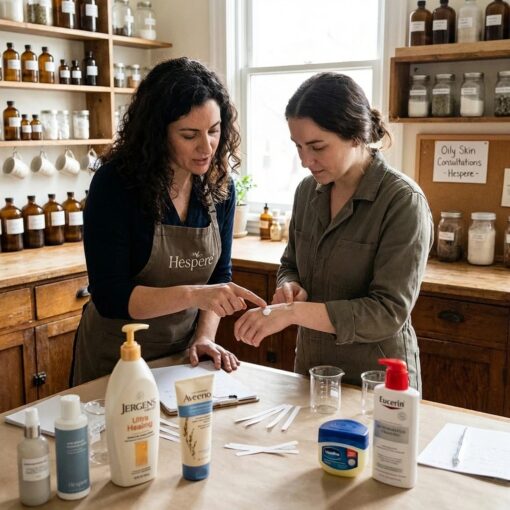
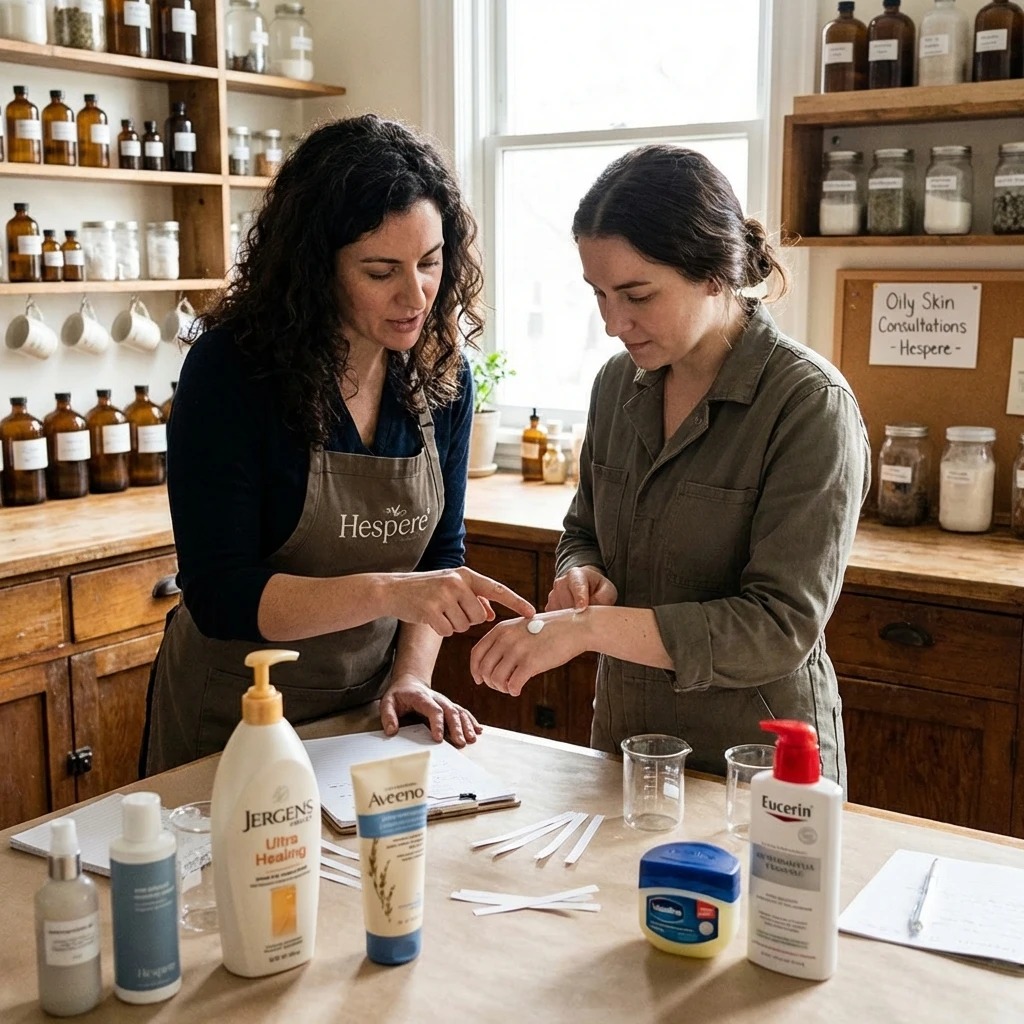
These are body moisturizers and skin-protecting staples you can use while you’re getting your routine under control. The goal here isn’t to collect ten lotions. It’s to match the formula to the job.
Lubriderm Daily Moisture Lotion – For Normal To Dry Fragrance Free, 16 oz (paid link)
Fragrance-free is a helpful default when you’re troubleshooting breakouts or sensitivity, because it removes one common variable. This is the kind of no-drama lotion that works for everyday body hydration when you want to keep your routine predictable. Predictable is good.
Aveeno Skin Relief Moisturizing Lotion for Sensitive Skin (paid link)
If your skin gets itchy or reactive, sensitive-skin body lotions can make your day easier, especially after shaving or a long shower. Use it right after toweling off, when your skin is still a little damp. Timing matters.
Eucerin Advanced Repair Body Lotion 16.9 Fluid Ounce (paid link)
Lotions labeled “repair” often lean on ingredients like urea and other hydrators that help with rough, dry texture. This is a solid direction when your skin feels bumpy or tight, even if you’re oily in other areas. Skin can multitask, unfortunately.
Jergens Ultra Healing Lotion, 32 Ounce (paid link)
If you want a big bottle that you’ll actually use, this fits the “keep it by the sink and don’t overthink it” approach. Put it on hands, arms, and legs, then move on with your life. No analysis required.
Keri original dry skin lotion, soothing dry skin formula – 20 Oz (paid link)
Dry skin lotions can be helpful for folks who get that tight feeling after cleansing or during winter heating season. If you’re in a cold snap in Chicago or Toronto, your body skin may need more support than your face does. That’s normal.
Aveeno Daily Moisturizing Lotion Tube, 3 Count (paid link)
Travel sizes and tubes are underrated, especially if you’re the kind of person who moisturizes only when it’s convenient. Keep one in a gym bag, one at your desk, one in your bathroom. You’ll use it more.
Cocoa Butter Body Lotion by Nivea for Unisex (paid link)
Cocoa butter formulas tend to feel richer, so they can be better for legs, elbows, and areas that get rough. If you’re worried about clogging, keep richer textures on the body and go lighter on the face. That division saves a lot of frustration.
Vaseline Original Healing Jelly – Protects Dry, Cracked Skin (paid link)
This is not a “full body every day” item for most people. It’s a targeted tool for cracked spots, chafing, and sealing in moisture on problem areas, like the corners of your nose when you’ve been sick. Use a tiny amount. Tiny.
Inis the Energy of the Sea Revitalizing Body Lotion, 500ml (paid link)
Sometimes you want body lotion that feels like self-care without turning your whole routine into a project. If scent doesn’t bug your skin, a fragranced body lotion can be your “done and done” step after a shower. Just don’t use fragrance as a cover-up for irritation.
Estée Lauder Beautiful Perfumed Body Lotion, 248 ml (paid link)
This is another fragranced option that’s more about the experience than troubleshooting. If you’re acne-prone on the chest or back, consider keeping perfumed lotion to areas that don’t break out, like arms and legs. You get the vibe without the drama.
As an Amazon Associate I earn from qualifying purchases.
Step 5: Keep pores clear with simple rules
You can use moisturizer for oily skin and still keep pores clear if you treat it like a controlled experiment, not a personality trait. Apply a thin layer, give it 10 minutes, then decide if you need more. Don’t stack three moisturizers because one didn’t “feel” hydrating fast enough.
Also, if you’re using acne treatments like benzoyl peroxide, adapalene, or exfoliating acids, moisturizing often helps you tolerate them with less peeling and irritation. That’s not hype. It’s just how skin behaves.
Near the end of the day, if your forehead could fry an egg but your cheeks feel tight, that’s your sign to tweak texture, not quit. And yes, keep a spare tube in the glove compartment next to that one lip balm you can never finish, it’s a very North American tradition.
Key Takeaways (No Pore Panic Edition)
- Oily skin can still be dehydrated, and skipping moisturizer can make things feel worse
- Ingredient categories beat marketing terms when you’re choosing products
- Use richer textures on the body and lighter textures where you clog easily
- Patch test and change one thing at a time, so you can tell what’s helping
- A simple routine done consistently gets better results than a complicated one you hate
Finding the right moisturizer for oily skin is mostly about reducing variables, then paying attention to patterns, like when you get shiny, where you break out, and how your skin feels after cleansing. The best starting routine is the one you’ll do on a random Tuesday, not the one you’d do in an imaginary life with unlimited time. Give any new product a couple of weeks, keep notes if you’re prone to guessing, and don’t be surprised if your face and body want different things. Skin changes with seasons, stress, and even how often you’re flying or blasting the AC. If you want help tightening up your routine without adding clutter, you can always Contact Hespere when you’re ready.